
Introduction
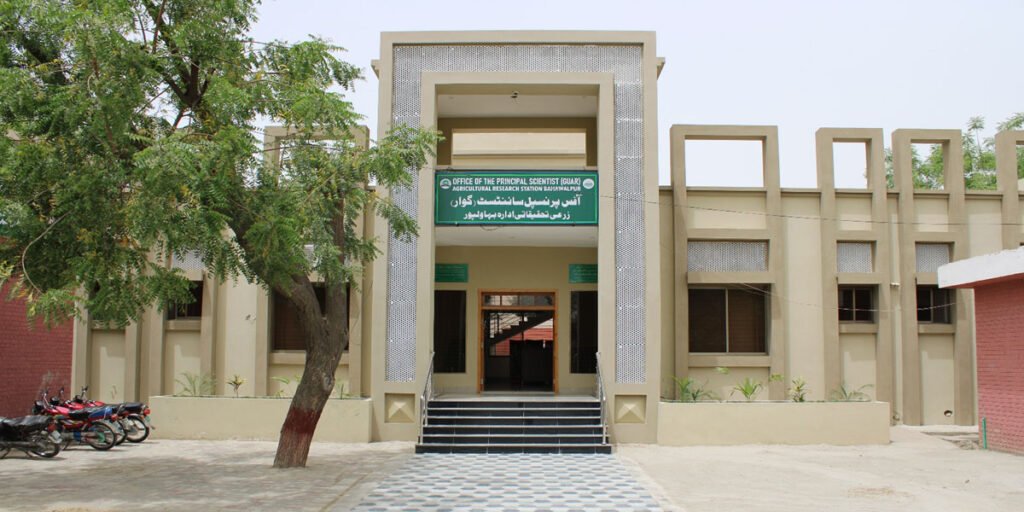
The Government of the Punjab, Agriculture Department established a Guar Research Sub-Station in the year 1973-74 at Bahawalpur for the improvement of Guar crop. After that in 1983-84 a development scheme, “Intensification of Research on Fodder” was approved by the Govt. of Punjab and a full-fledged Agricultural Research Station started work under the control of the Director, Fodder Research Institute, Sargodha.
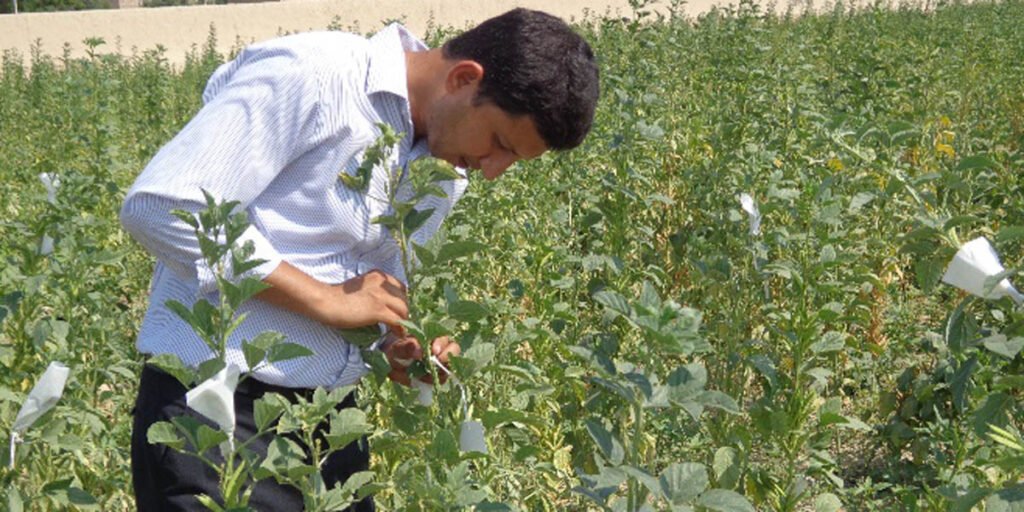
Guar is a drought tolerant, summer annual legume, well adapted to arid and semi-arid regions of Pakistan. Although, guar is considered to be a minor crop, however it has a larger role among the domesticated plants that supply the food and needs of human beings as it contains a high content of nutritional quality protein. Guar is the only commercially exploited source of a very valuable product called “Galactomannan” (guar gum, 25-35%) derived from its endosperm.
Guar gum has diversified industrial applications e.g. food, pharmaceutical, textile industry, drugs, paper, cosmetics, tobacco, oil & gas well drilling, hydraulic fracking, fish farming, poultry and cattle feed, paint, leather, firefighting, explosive, beverages, confectionary, dairy products, baby pampers, mosquito mats, photography, mining, construction and so on. It is also used for vegetable, green manuring, guar meal and fodder purposes. On account of industrial value, guar has great demand from foreign countries like USA, Britain, France, Germany, Italy, UAE, Lesotho, South Africa, Hong Kong, China, Japan, Australia, etc. Pakistan exports guar and guar products to more than 60 countries of the world. Guar gum is an important source for foreign exchange earnings. World’s most of the guar is grown in tropical deserts of Indo-Pak Sub Content. India produces 80% of guar, Pakistan 15% and only 5% is produced by the other countries (USA, S. Africa, Sudan and Australia). Keeping in view the importance of its seed, this station is conducting research to develop high yielding, early maturing, drought tolerant and disease and insect resistant varieties of guar with high gum contents.
This station also conducts Adaptability fodder yield trials of Lucerne, Berseem, Oats, Sorghum, Maize and Pearl Millets and produces BNS and pre-basic seed of these crops.
Research Activities
- Acquisition, maintenance and evaluation of guar germplasm for use in breeding programme.
- Hybridization and study of filial generations of guar.
- Identification of promising progeny lines of guar
- Adaptability and yield evaluation trials of guar
- Screening of advance lines of guar against insect pest and diseases.
- Evaluation of advance lines of guar under drought stress conditions to address climate change.
- Agronomic studies of advance lines of guar for optimization of seed rate, sowing method, sowing time, row spacing, irrigational requirements and other inputs like NPK.
- Production of Pre-basic seed of Lucerne, Berseem, oats, sorghum and guar.
- Adaptability/Zonal/ National Uniform Fodder Yield Trials of fodder crops like Lucerne, Berseem, Oats, Sorghum, Maize and Pearl Millet.
- Transfer of the production technology of fodder crops to the farmers.
SERVICES OFFERED
- Provision of pre-basic seed of fodder crops like guar, Lucerne, Berseem, oats and sorghum to the farmers and seed companies of the southern Punjab.
- Provision of guar germplasm for research purposes to different research institutes and universities on their request.
- Demonstration of fodder production technology to the farmers.
- Advisory services to the visiting farmers regarding varietal selection, control of insect pest and diseases, harvesting and storage of crop seed etc.
Facilities offered to the farmer
- Advisory services to the farming community.
- Provision of high-quality seed of fodder crops.
- Farmers trainings, seminar and workshops.
ACHIEVEMENTS OF THE STATION/GUAR VARIETIES DEVELOPED:
| Sr. # | Variety Name | Year of Release | Yield Potential (Kg ha-1) | Recommended Areas | Salient Features |
| 1 | 2/1 | 1984 | GY= 1200 Kg ha-1 FY= 26 t ha-1 | Bhakkar, Layyah Khushab, Dera Ghazi Khan | Long stature, long duration, branched, grain bold & dark brown, suitable for fodder purpose. |
| 2 | BR-90 | 1991 | GY= 1400 Kg ha-1 FY= 28 t ha-1 | Bhakkar, Layyah Khushab, Dera Ghazi Khan | Short stature, long duration, profusely branched, golden grain colour, suitable for fodder & grain purpose. |
| 3 | BR-99 | 2000 | GY= 1900 Kg ha-1 FY= 30 t ha-1 | Bhakkar, Layyah Khushab, Dera Ghazi Khan, Multan | Single stemmed, no branched, medium duration, seed colour-grey, tolerant to sucking pests and diseases, suitable for grain, fodder and vegetable purposes. |
| 4 | BR-2017 | 2017 | GY= 2400 Kg ha-1 FY= 35 t ha-1 | Bahawalpur, Dera Ghazi Khan, Multan & Sargodha Divisions | Hairy, erect type, 0-1 branch, higher gum (33.71%) & protein contents (30.75%), early maturing and short duration variety with heavy fruiting, requires very low inputs, tolerant to sucking pests and diseases, suitable for grain, fodder and vegetable purposes. |
| 5 | BR-21 | 2021 | GY=2500 Kg ha-1 FY= 34 t ha-1 | Bahawalpur, Dera Ghazi Khan, Multan & Sargodha Divisions | Erect type, 0-1 branch, Non-hairy, short duration & drought tolerant, heavy fruiting, gum contents (34.87%) & protein contents (30.25%), suitable for fodder, grain and vegetable purposes. |
| 6 | BR-2022 | 2023 | GY= 2800 Kg ha-1 FY= 34 t ha-1 | Bahawalpur, Dera Ghazi Khan, Multan & Sargodha Divisions | Bushy type, 4-6 Branches, hairy, main stem with heavy fruiting, short duration, gum contents (35.29%) & protein contents (32.25%) suitable for fodder & grain purposes. |
| 7 | Thal Guara | 2023 | GY= 2900 Kg ha-1 FY= 36 t ha-1 | Bahawalpur, Dera Ghazi Khan, Multan & Sargodha Divisions | Bushy type, 8-10 branches, hairy, early maturing and short duration, gum contents (33.47%) & protein contents (31.00%), suitable for fodder & grain purposes. |
Contact
Principal Scientist (Guar)
Phone: +92-62-9330011
Email: grsbwp@gmail.com
Address: Agricultural Research Station, Gulberg Road, Modal, Town-A, Bahawalpur, Pakistan